
Our Initiatives

01

Professional Enrichment Track (PET)

PET is our professional learning and training initiative for mental-health professionals and professionals-in-training.

It is not a course catalogue. It is how we extend what we have learnt through our own work beyond the people directly within our programmes.

Now open · PET Cohort 1

14 November 2026 to 11 April 2027

15 online sessions with 14 facilitators across five phases, starting with an orientation on Saturday 14 November 2026. Registration closes on 7 November 2026.

Why PET exists

We believe that making quality mental-health support accessible to children requires more than providing direct services.

We cannot reach every child directly. But there are counsellors, psychologists, social workers, educators, healthcare professionals and other practitioners already working with children, adolescents, families, schools and communities.

If these practitioners are better equipped, more reflective, more skilled and better supported, they can carry quality mental-health support into the populations they already serve.

PET exists to strengthen that ecosystem. Our larger hope is to contribute to a movement of counsellor and practitioner leaders who can carry excellent, holistic and contextually grounded mental-health support into the places where children live, learn and grow.

  1. 01Strengthen practitioners
  2. 02Strengthen the mental-health ecosystem
  3. 03Expand the capacity to support children
  4. 04Contribute to greater access to quality mental-health support

The gap we respond to

Professional practice requires more than knowledge

There is already significant knowledge, training and professional development available to mental-health professionals. What we have observed through our own work is that there is value in creating additional spaces for practical exposure, reflection, professional dialogue, contextual learning and continued development.

Psychology can be highly abstract. Knowing a theory, understanding a framework or learning a technique does not automatically translate into knowing how to work thoughtfully with a real child, a real family, a real school or a real community.

PET exists to create more of these learning spaces — with particular attention to children and adolescents, communities, schools and the wider contexts in which mental health exists.

Practice requires opportunities to:

  • Connect knowledge to practice
  • Engage with real-world complexity
  • Learn from people with practical experience
  • Reflect on one's own practice
  • Encounter different perspectives
  • Develop practical skills
  • Sit with uncertainty and ambiguity
  • Understand the systems and contexts within which mental-health work takes place
  • Continue learning beyond formal academic training

What our work has taught us

Mental-health support does not begin when a counsellor enters a room.

A child's experience of mental health is shaped by the environments, relationships and systems around them. A school having a counsellor does not, by itself, make that school mentally healthy.

The counsellor is an important part of the ecosystem — but not the entire ecosystem. This is one of the perspectives we want to make more accessible through PET.

It is

Systemic

It is

Contextual

It is

Relational

It is

Holistic

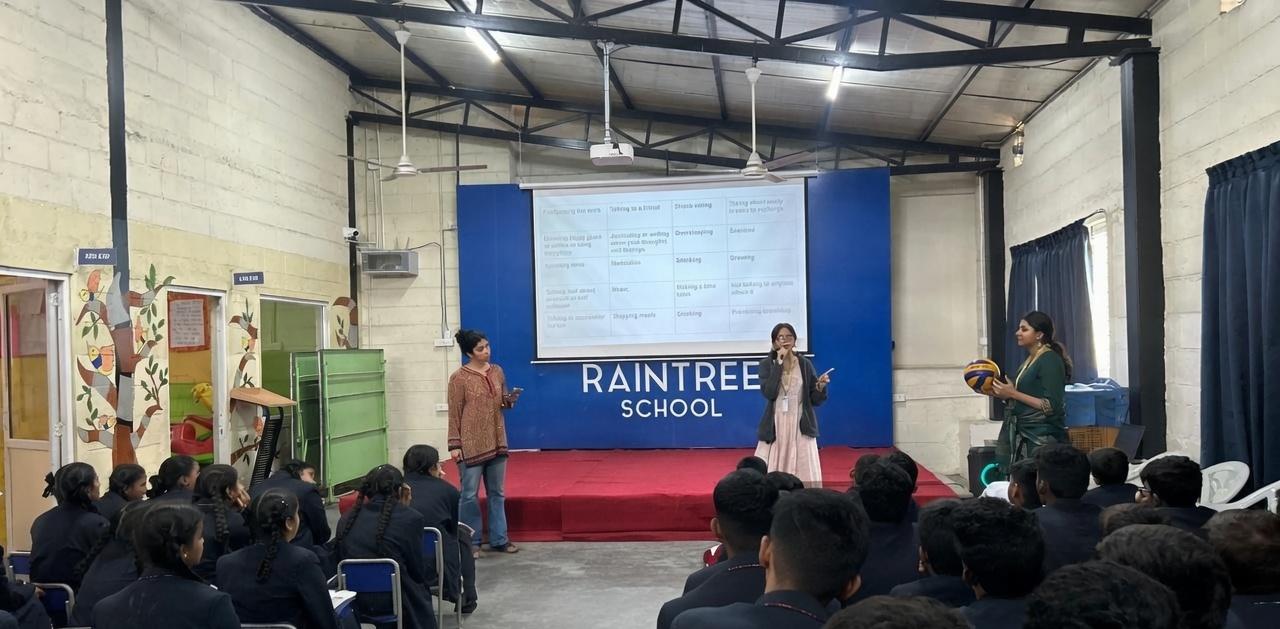
Practitioners learning together in a group workshop

Who PET is for

PET is for people who are already working — or preparing to work — with children, adolescents, families, schools and communities.

  • Psychologists
  • Counsellors
  • Social workers
  • Mental-health professionals-in-training
  • School counsellors
  • Community-based practitioners
  • Professionals working with children outside school settings
  • Professionals in allied fields whose work intersects with children, communities and mental health

Our learners may be at different stages of professional development. Some may still be studying, some may be entering their first professional roles, and others may already have considerable experience and be looking to deepen or expand their practice.

What connects them is not necessarily their designation or career stage. It is the work they are trying to do and the people they are trying to serve.

What participants carry forward

The PET Briefcase

We want participants to leave PET with more than notes, certificates or a new technique. We want them to leave with a professional briefcase — things they can carry into the work they already do.

01

Knowledge

A stronger understanding of concepts, frameworks, evidence and areas of practice.

02

Practical skills

The ability to translate learning into action and apply it meaningfully within professional contexts.

03

Curiosity

A willingness to continue asking questions, exploring and learning rather than assuming there is always one right answer.

04

Reflective capacity

The ability to examine one's own practice, assumptions, responses and decisions.

05

Ethical judgement

The ability to think through what is appropriate and responsible within the complexity of real-world practice.

06

Systems thinking

The ability to understand individuals within the relationships, institutions, communities and contexts around them.

07

Professional community

Connections with other practitioners and a sense that professional learning does not have to happen in isolation.

The briefcase is not a checklist of competencies. It represents the things we hope practitioners carry forward into their practice.

Our philosophy of learning

We believe professional learning should do more than transfer information.

People learn when they can connect knowledge to experience, engage with complexity, practise, reflect and think alongside others. The method should serve the learning, not the other way around.

A PET learning experience should feel

Thoughtful, relevant, engaging, practical, reflective and intellectually alive.

“I have something I can take into my practice — and I have something new to think about.”

PET should not feel like

  • A two-hour lecture followed by a certificate
  • Information being delivered for its own sake
  • A collection of disconnected techniques
  • A space where the facilitator's expertise is treated as unquestionable

Our principles

What we hold to

We don't teach techniques without context.

A technique is only useful when practitioners understand the person, context and purpose around its use.

We don't confuse expertise with teaching ability.

Knowing something deeply does not automatically mean someone knows how to help others learn it.

We don't sacrifice learning quality for scale.

More participants do not automatically mean greater impact.

We don't separate individual mental health from the systems in which people live.

People exist within families, schools, communities and institutions. Our learning should reflect that complexity.

We don't treat learning as information delivery.

A participant should leave with something they can carry into their practice — not simply something they heard.

PET Cohort 1 · 14 November 2026 to 11 April 2027

Theory in one hand. A child in front of you.

While mentoring early career therapists and final-semester students, we kept seeing the same gap: the theory is there, the room is harder.

Cohort 1 is our answer, building on the training behind our Fellowship.

Sessions
15
Facilitators
14
Phases
5
Orientation
14 Nov

Who is it for?

Mental health professionals in practice and in training (Master's, certification and similar).

Who facilitates?

Academic experts, practising psychologists and counsellors, educators, and specialists in children, adolescents and community mental health.

How does it feel?

Curated as one rhythm, from your first session to your last, so you finish equipped and sharp.

The biggest learning outcome

You will be able to walk into the room with a client (child & adult) more equipped, more grounded and ready to help.

Knowledge

How children think, feel and develop.

Skill

How to read behaviour and work through play, art and nature.

Application

How to use it in your own practice, and sustain it.

Understand children better

You will see what is behind a child's behaviour: their needs, emotions and development.

Learn practical ways to help

You will have hands-on ways to support children through play, art, nature and the school.

Look after yourself

You will learn to hold boundaries and care for yourself, so you can stay in this work.

Find your people

You will join a network of mental health professionals, from those in training to seasoned practitioners.

Courses & schedule

Five phases, one journey

Each phase prepares you for the next, so you move from wondering what a child needs to feeling equipped to support them. Every Sunday from 15 November, after an orientation on Saturday 14 November.

Begin · Saturday 14 November 2026

Orientation for everyone

See how the pieces connect. Every package includes the orientation.

Every session is online on Zoom, about 90 minutes, on Sundays. Session timings will be confirmed before the orientation.

MHPs: mental health professionals. CWSN: children with special educational needs. IFS: Internal Family Systems.

All dates are proposed and will be confirmed.

Meet our facilitators

We believe that subject expertise and facilitation ability are equally important.

A PET facilitator brings genuine depth in their area of knowledge, experience or practice, and helps create a meaningful learning environment. We recognise that these capabilities do not always arrive together — and PET can support facilitators through facilitation training and orientation to our pedagogy and approach to learning.

Facilitators are not content vendors. They are contributors to the learning culture PET is trying to build.

Adhira Syam

Phase 1 · Notice

Adhira Syam

School counsellor and Psychotherapist

Works with children, adolescents, parents and teachers in school, and with adults and older adults in private practice. Master's from CHRIST (Deemed to be University). A humanistic, compassionate, relationship-first approach, with trauma-informed, somatic and grief-focused work.

Facilitating

Presence of the therapist: Technique, Intuition and the Practitioner's Role

Sun 15 Nov 2026 · Online on Zoom

You will gain: A clearer sense of what you bring into the room beyond technique: your presence, your intuition, your role.


Shruti Ramakrishnan

Phase 1 · Notice

Shruti Ramakrishnan

Psychologist and former Teach For India Fellow

Began as a psychologist at Manas Foundation, working with adolescents and women in shelter homes. Later led mental health curriculum and school-based programmes, and most recently worked as a Program Consultant at National Bal Bhavan. Trained in Rational Emotive Behavior Therapy (REBT).

Facilitating

Looking beyond behaviour: Emotional and Psychological Needs in Children

Sun 22 Nov 2026 · Online on Zoom

You will gain: A way to read what a child's behaviour is telling you about their emotional and psychological needs.

Deepali Dahikamble

Phase 1 · Notice

Deepali Dahikamble

Teacher, Inventure community school · Teach For India Fellow

Brings the classroom lens: observing children's behaviour in context, building emotionally safe classrooms, and working alongside counsellors and mental health professionals.

“As an educator and facilitator, I am committed to creating inclusive learning environments that nurture children’s emotional well-being alongside their academic growth.”

Facilitating

Classroom Observation For a School Counsellor: What Children's Behaviour Communicates

Sun 29 Nov 2026 · Online on Zoom

You will gain: Practical ways to observe a child in the classroom, in context, and respond without rushing to label.

Prerna Dash

Phase 2 · Understand

Prerna Dash

Early childhood educator and consultant

Cognitive science researcher and child development specialist, with an M.Sc. in Neural and Cognitive Sciences from the University of Hyderabad. Turns neuroscience and executive function research into practical tools for educators and practitioners.

Facilitating

Executive Function Profiling in Clinical and Educational Settings For Educators & MHPs

Sun 13 Dec 2026 · Online on Zoom

You will gain: How to profile executive function in school and clinic, for educators and mental health professionals, and use what you find.

Srushti Shah

Phase 2 · Understand

Srushti Shah

Therapist and Professor

Founder of Swa-Karuṇā Mental Health Services, offering individual and couple counselling with an integrative, trauma-informed approach. Teaches postgraduate students at SNDT Women's University. Completed a Master's in Clinical Psychology, a Diploma in Family and Marriage Counselling and a Certification in Trauma Informed Care.

Facilitating

Emotion Regulation: Understanding Children's Emotional Development

Sun 20 Dec 2026 · Online on Zoom

You will gain: How children's emotions develop, and how to help them regulate big feelings.

Dr. Grace Maria Jochan

Phase 2 · Understand

Dr. Grace Maria Jochan

Assistant Professor in Psychology

Teaches psychology, focusing on applying theoretical models to client case histories. Specialised in clinical and social psychology research and practice, with a focus on digital mental health and human-computer interaction, and has multiple international publications on these topics. Currently coordinates the postgraduate programme at St Joseph’s University, Bangalore.

Facilitating

Case Conceptualisation: Applying a Theoretical Model to Case Histories & Behavioral Contexts

Sun 10 Jan 2027 · Online on Zoom

You will gain: How to turn a case history into a clear picture, using a theoretical model.

Dr. Sonia Elizabeth Prasadam

Phase 3 · Express

Dr. Sonia Elizabeth Prasadam

Mental Health Therapist & Educator

With an M.Phil. and Ph.D. in Psychology, she currently works as a therapist for adults. However, she integrates children’s books, music, metaphors, and experiential exercises into her therapeutic work. Having begun her career as an early childhood music educator, she continues to draw on the power of music, movement, play, and imagination in connecting with both children & adults.

Facilitating

Play-Based Intervention For Children I: Storytelling and Imaginative Play

Sun 24 Jan 2027 · Online on Zoom

You will gain: Hands-on ways to help children process feelings through storytelling and imaginative play.

Facilitating

Play-Based Intervention For Children II: Sand Play

Sun 31 Jan 2027 · Online on Zoom

You will gain: How to use sand play to help children process feelings.

Geetika Sawhney

Phase 3 · Express

Geetika Sawhney

Psychologist and researcher

Counselling psychologist and researcher focused on community mental health through a nature- and play-based lens, grounded in existential-humanistic and cognitive analytic frameworks. A trauma-informed, rights-based practice.

Facilitating

Ecotherapy in Practice For MHPs: Working with Disability Outdoors

Sun 7 Feb 2027 · Online on Zoom

You will gain: How nature-based practice works, and how to work with disability outdoors, for mental health professionals.

Shubhangi Tiwari

Phase 4 · Hold

Shubhangi Tiwari

School counsellor and counselling psychologist

School Counsellor at Sardar Patel Vidyalaya, alongside maintaining a private practice. Holds an M.Sc. in Counselling Psychology from CHRIST University. Trauma-informed, with training in grief counselling and experience working with children as well as adults.

Experienced in working with CWSN children, parent counselling, guiding families through the assessment and referral process, and helping identify appropriate support, accommodations, and interventions to meet each child’s needs.

Facilitating

Special Educational Needs in Schools: Identification and Support (CWSN)

Sun 21 Feb 2027 · Online on Zoom

You will gain: How to identify and support children with special educational needs in school.

Bharath Vasan

Phase 4 · Hold

Bharath Vasan

He/they

Founder & Trustee, The Grey Sunshine Project

Founder of The Grey Sunshine Project; leads HR at Teach For India, Bengaluru.

A psychotherapist and human resources professional, Bharath also leads three of the four complimentary Sundays included with the full programme.

Facilitating

Sitting therapeutically with a child as a Client: Child-Centred Approaches & Modalities in School Counselling

Sun 28 Feb 2027 · Online on Zoom

You will gain: What it means to sit with a child as a client, with child-centred approaches for school counselling.

Phase 4 · Hold

Reetika Shah

Brings depth in Internal Family Systems (IFS).

Full profile to follow.

Facilitating

Internal Family Systems (IFS) in Practice: Working with Parts

Sun 7 Mar 2027 · Online on Zoom

You will gain: How to work with parts of a person through an Internal Family Systems lens.

Chinmayee Aphale

Phase 5 · Sustain

Chinmayee Aphale

Psychologist in private practice

Psychologist in Pune with six years of experience. After working with different organisations as a therapist, moved into full-time private practice in 2023. Also a mental health writer and employee assistance programme (EAP) counsellor, with a Diploma in Community Mental Health. Loves working with groups.

Facilitating

Burnout Prevention: Building Safety and Sustaining Your Practice

Sun 14 Mar 2027 · Online on Zoom

You will gain: How to build safety around your practice and prevent burnout, so you can keep doing this work.

Anisha Rego

Phase 5 · Sustain

Anisha Rego

She/her

Counselling psychologist and Expressive Arts Therapy Practitioner

Anisha has a person-centred approach and uses a trauma-informed and queer-affirmative lens. She works with individuals and groups across various settings.

As an artist herself, she believes that her deeply personal relationship with the Arts makes her work in the field feel almost like introducing her clients not just to a medium, but also to a very dear friend.

Facilitating

Expressive Arts for Practitioner Self-Care: Building Sustainable Rituals

Sun 21 Mar 2027 · Online on Zoom

You will gain: Self-care rituals built with the expressive arts, so your practice lasts.

Sarthak Parikh

Phase 5 · Sustain

Sarthak Parikh

Counsellor and Career psychologist

Sarthak is a counselling psychologist and an internationally certified career counsellor in Mumbai. He works with 16-30 year olds, online and offline, using a flexible approach shaped around each person. He is certified in solution-focused brief therapy, and creates content on therapy and career topics on the internet.

Facilitating

Developing a Professional Identity: Finding Your Therapeutic Style

Sun 4 Apr 2027 · Online on Zoom

You will gain: A clearer sense of your own professional identity and therapeutic style.

With the full programme

Four complimentary Sundays to accelerate your career

Included only with the full programme. Three are led by Bharath Vasan, founder of The Grey Sunshine Project. They are primarily hybrid spaces — in person in Bengaluru, with an online option — ranging from workshops to networking spaces.

Sun 6 Dec 2026

Safeguarding children

How to keep children safe through the counselling process: the child safety lens every professional needs.

Sun 17 Jan 2027

Professional development

Not just any resume workshop. It is built for mental health professionals, on what a strong resume looks like in the field of psychology/client work.

Sun 14 Feb 2027

Entrepreneurship

Everything you need to know to start a business or organisation in the field of mental health.

Sun 11 Apr 2027

Closing event

A networking mixer to close the journey together, and to meet the people you have learned with.

Choose your way in

Pick what fits

A first taste

One session

₹799

for one session of your choice

  • 1 of 15 sessions
  • Orientation on 14 November
  • No complimentary spaces
Register

A step up

Three sessions

₹2,099

for three sessions, about ₹700 each

  • 3 of 15 sessions
  • Orientation on 14 November
  • No complimentary spaces
Register

The whole journey

All 15 sessions

₹5,999

for everything, about ₹400 a session

  • All 15 sessions
  • Orientation on 14 November
  • 4 complimentary career spaces
  • Session resources
Register

Every package includes the orientation on Saturday 14 November, a certificate from GSP, and a network of peers and professionals in your field. Each session builds on the last, so one or three sessions means joining partway. Cohort 1 has 25 places.

A certificate

From The Grey Sunshine Project, for being part of PET.

Networking with peers and professionals

Meet and learn alongside peers and professionals in your field.

A place in our community

A community of people invested in children's mental health, and in you.

The full PET experience

Live the whole journey: Notice, Understand, Express, Hold and Sustain.

A possible pathway into our Fellowship

A possible route into the Fellowship next year. Details to follow.

Good to know

Questions you may have

Is it online?

Yes. Every session is on Zoom. The four complimentary Sundays are in person in Bengaluru, with an online option.

How long is a session?

About 90 minutes, once a week, on Sundays.

What time are the sessions?

We will confirm the time before the orientation.

Who will I learn with?

Mental health professionals, in practice (within 5 years of practice) and in training (Masters & PhD Scholars), in the same room.

Can I join for just one session?

Yes. One session is ₹799 and three are ₹2,099. The full programme is ₹5,999. The full programme gives you full access to the programme, including the complimentary spaces and session resources.

When do places close?

Registration closes on 7th November. Your seat is held for 5 days while we confirm your payment.

Join PET Cohort 1

Register by 7 November 2026

  1. 01

    Read about the journey

    You are here. Take your time.

  2. 02

    Register

    Share a few details and choose your package.

  3. 03

    Hold your seat

    Pay within 5 days. Unpaid seats go to the waitlist.

  4. 04

    Join us on 14 November

    The orientation is on Children's Day. Your first session is the next day.

Only 25 places. Unpaid seats go to the waitlist.

Register for PET Cohort 1
QR code linking to the PET Cohort 1 participant registration form

Scan to register

All dates are proposed and will be confirmed.

The simplest way to remember PET

We strengthen practitioners.

Practitioners strengthen the ecosystem.

A stronger ecosystem expands the possibility of quality mental-health support for children.

PET is one way we extend our reach — not by trying to reach every child ourselves, but by strengthening the people who can.

Explore our other initiatives